



Identify Bones
How to Identify a Skull & Bones Member
You're hiking or walking in beautiful Switzerland and find bones or a skull – what animal is it? Perhaps you even discover a whole skeleton. But how can you find out which animal the find belongs to? SWISSkulls is an expert in this field and will be happy to help you!
What kind of animal could it be?
Basically, you can assume that it is a native wild animal or a domestic animal. The most common bones found are from:
Wild animals such as fox, roe deer, red deer or wild boar, domestic animals such as dog or cat, or birds
Most animals retreat into dense undergrowth before their death, so they are often not found. Smaller animals are also eaten by scavengers. Bones decompose relatively quickly, and usually only small remains are left. Rodents gnaw on bones, and snails or insects also contribute to decomposition. Some animals, such as lynx, badgers, or foxes, drag bones into their dens.
How to identify the animal by its skull
First, you should determine whether the skull is from a carnivore, ungulate, or rodent. The teeth and their arrangement provide the best clues.
Carnivores
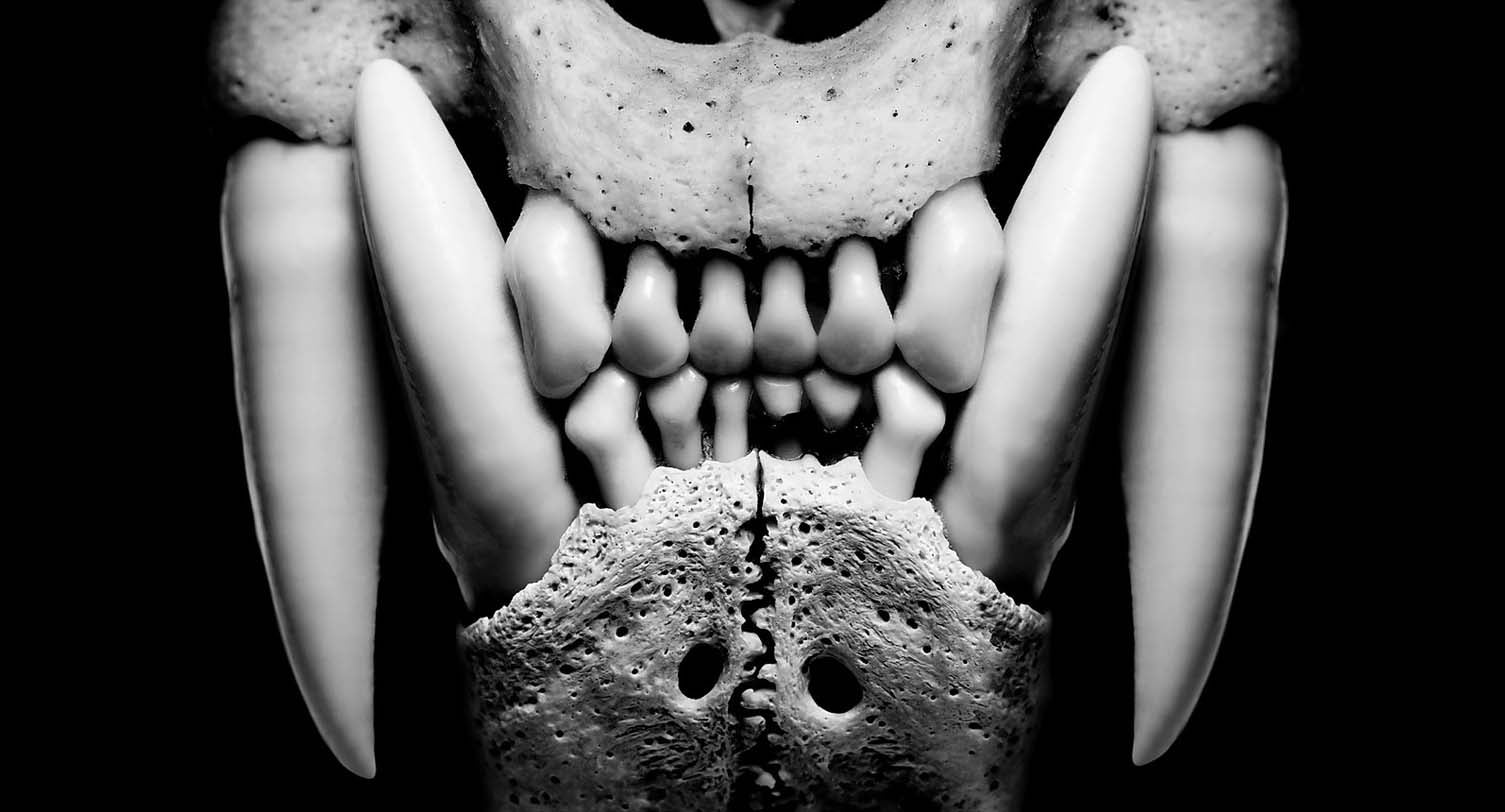
- Felines: Narrow canines, round skull
- Canines & Mustelids: Large canines, elongated skull
Rodents
- Rodents: Conspicuous incisors without canines
Ungulates (Even-toed ungulates)
- Deer species (Red deer, Roe deer):
- The roe deer skull is quite short, while red deer skulls are longer.
- Male deer can be recognized by their antler pedicles.
- Young red deer have upper canine sockets in the upper jaw (small bumps or holes where the canines were).
- Wild boar:
- Very elongated skull
- Large tusks (in male animals)
- Pointed incisors have teeth in the upper and lower jaw
- Ibex (Chamois, Alpine ibex):
- Belong to the goat family and therefore have horn core bones.
- Chamois have smaller skulls, ibex have larger ones with thick horn bones.
Comparison with existing skulls
If you are unsure, you can browse our assortment and compare your find with already identified skulls. If you have any questions, please do not hesitate to contact us!
Tierschädel-Identifikation & Alter
Lade ein Foto hoch. Du erhältst eine Schätzung zu Art und (wenn sichtbar) Zahnabrieb/Alter.
SWISSskulls Pro Check Beta 1.5
Zusätzliche Angaben (optional)
Hilft der Datenbank bei Art- & Altersschätzung.
Je genauer die Angaben, desto besser die Trefferquote.
Bitte ein Bild auswählen.
Tipp: Für Altersbestimmung – Nahaufnahme der Backenzähne (seitlich), ohne Reflexion.
Ergebnisse sind eine digitale Schätzung und können abweichen.
Ergebnis
Art / Alter / Sicherheit
Analyse
Noch kein Ergebnis. Lade ein Bild hoch und starte die Analyse.
Identifikation
–
Alter (Schätzung)
–
Sicherheit
–
Beschreibung
–
Ähnliche Treffer
Top Matches aus Referenzquellen
Details
powered by Skullstore GmbH